


Last Updated: January 7, 2026
How to Detect Leaking Pipes involves a combination of visual inspection for damp spots and stains, water meter testing to spot unexplained flow, and professional tools like acoustic listening devices and thermal imaging to locate hidden leaks without damaging structures. Plumbers also use tracer gas or moisture meters to pinpoint leaks behind walls or underground accurately. These non-invasive techniques help find leaks early and reduce repair costs. (pcla.co.uk)
How to Detect Leaking Pipes Before They Cause Serious Damage
How to detect leaking pipes is something every homeowner should know, especially in Dublin where older pipework and cold winters can increase the risk of hidden leaks. A small drip behind a wall or under the floor can quietly cause damp, mould, and costly repairs if it goes unnoticed for too long.
Many people only realise there is a problem when they see water stains, smell dampness, or notice their water bill going up. By then, the leak may have already caused damage to walls, floors, or even the structure of the house. That’s why learning how to spot leaks early can save you a lot of stress and money.
In this guide, we’ll explain the signs of leaking pipes, how to check for leaks yourself, and when to call a plumber for leaks before things get worse. We’ll also share how we help Dublin homeowners find and fix leaks quickly, with as little disruption as possible.
Why Detecting Leaking Pipes Early Is So Important
Leaking pipes rarely fix themselves. In fact, they usually get worse over time. What starts as a small crack or loose joint can turn into a burst pipe or major water damage if left untreated.
Here’s why early leak detection really matters:
Prevents structural damage
Water can weaken walls, ceilings, and floors, leading to expensive repairs
Stops mould and damp:
Hidden moisture creates the perfect conditions for mould, which can affect indoor air quality.
Reduces water bills:
Even a slow leak can waste hundreds of litres of water every day.
Avoids emergency call-outs:
Catching a leak early can help you avoid needing urgent emergency plumbing services in Dublin later on.
In many cases, homeowners don’t realise there’s a problem until the damage is already visible. That’s why knowing how to detect leaking pipes early — and acting fast — can make a big difference to both your home and your wallet.
Common Signs of Leaking Pipes in Your Home
One of the easiest ways to spot a problem early is by knowing the common signs of leaking pipes. Some are obvious, while others are more subtle and easy to miss if you’re not looking for them.
Visible Signs You Shouldn’t Ignore
These are the signs you can usually see straight away:
Damp patches or water stains on walls or ceilings
Paint that is peeling, bubbling, or flaking
Drips under sinks, near toilets, or behind appliances
Puddles on floors that keep coming back after drying
If you notice any of these, it’s very likely that water is escaping from a pipe nearby and needs to be checked as soon as possible.
Hidden Signs of Water Leaks
Some leaks stay hidden for weeks or even months, especially if they are inside walls or under floors. Watch out for:
Musty or damp smells that don’t go away
Warm or cold spots on floors
Cracks forming in plaster or tiles
Sounds of running water when no taps are on
Sudden drops in water pressure in one area of the house
These signs often point to hidden water leaks in the home, which can slowly damage your property if left untreated.
How to Find a Water Leak in House Using Simple Checks
If you think you may have a leak, there are a few simple checks you can do yourself before calling a professional. Knowing how to find a water leak in house early can help you decide how urgent the problem is.
Check Your Water Meter
This is one of the easiest ways to confirm if there’s a leak:
Turn off all taps and water-using appliances
Take a reading from your water meter
Wait 30 to 60 minutes without using any water
Check the meter again — if it has moved, you likely have a leak
Inspect Common Leak Areas
Leaks often start in places that get used every day. Take a look at:
Under kitchen and bathroom sinks
Around toilets and shower trays
Behind washing machines and dishwashers
Near your boiler and hot water cylinder
Feel for moisture and check for small drips or corrosion around pipe joints.
Look for Changes in Walls and Floors
Even if you can’t see water, changes in surfaces can point to leaks:
Soft or spongy flooring
Tiles lifting or cracking
Walls that feel damp or unusually cold
If these checks don’t clearly show where the leak is coming from, it may be hidden inside walls or underground, which usually needs professional leak detection equipment.
How to Detect Leaking Pipes — Step-by-Step
This step-by-step process shows how to detect leaking pipes in a simple way. We also recommend using this as an infographic in the blog so homeowners can quickly understand what to check first and what to do next.
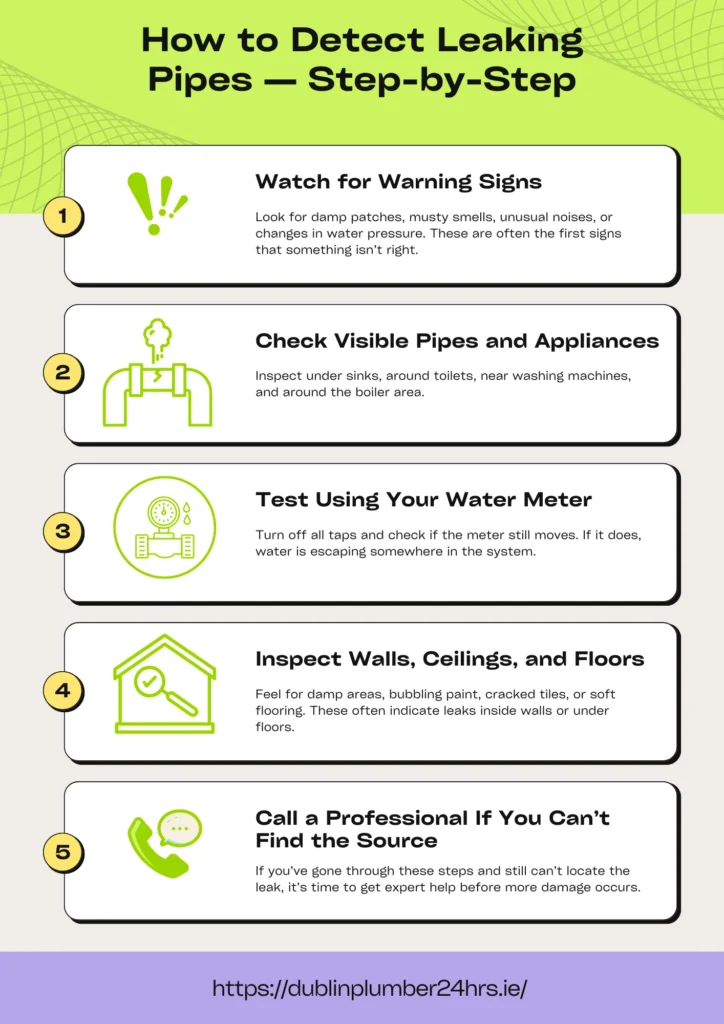
These steps help you spot many common leaks, but hidden pipework can be very hard to check without specialist tools. If you reach step 4 and still aren’t sure where the water is coming from, professional leak detection can save you from unnecessary digging and repairs.
How to Detect Water Leaks Inside Walls
Leaks inside walls are some of the hardest to find because the water spreads before it becomes visible. By the time you see a stain, the damage may already be happening behind the plaster.
Here are common signs that point to leaks inside walls:
Paint that bubbles, cracks, or peels
Walls that feel damp or colder than other areas
Faint mould spots appearing near skirting boards or corners
A constant damp smell that doesn’t go away even after airing the room
In many cases, homeowners try to open walls to find the leak, but this can lead to unnecessary damage and extra repair costs. Professional plumbers use moisture detection tools to locate leaks without breaking large sections of walls.
Hidden wall leaks can also damage tiles, flooring, and fixtures, which is why some homeowners end up needing bathroom renovation services in Dublin after a long-term leak is finally discovered. Catching the problem early helps avoid that level of disruption.
How to Find a Water Leak Underground
Knowing how to find a water leak underground can be tricky because the pipes are hidden below concrete, driveways, or garden soil. These leaks are often linked to the main water supply or outdoor pipework, and they can waste a lot of water before anyone notices.
Here are some common signs of underground leaks:
Wet or muddy patches in the garden during dry weather
Areas of grass that look greener or grow faster than the rest
A constant drop in water pressure inside the house
Unexplained increases in your water bill
If you notice any of these, it’s best not to dig randomly, as this can damage other pipes or cables. Professional plumbers use specialised equipment to trace underground leaks accurately, which helps avoid unnecessary disruption to your property.
Underground leaks should always be treated as urgent, as they can weaken foundations and lead to serious water loss if left untreated.
When to Call a Plumber for Leaks
While some small issues can be spotted early with simple checks, there are times when you should not delay getting professional help. Knowing when to call a plumber for leaks can prevent minor problems from turning into major repairs.
You should contact a plumber if:
You can hear water running but can’t find the source
Damp patches are spreading on walls or ceilings
Water pressure suddenly drops across the house
The leak keeps coming back after temporary fixes
The leak involves heating pipes or the main water supply
If water is coming through ceilings or flooding areas of your home, you should contact an emergency plumber in Dublin straight away to stop further damage and make the property safe.
Fast action not only protects your home but also reduces the overall repair cost, especially when leaks affect hidden pipework.
How We Detect Leaking Pipes in Dublin Homes
When leaks are hidden or hard to trace, professional detection makes all the difference. As a trusted local plumber in Dublin, we use safe and non-destructive methods to find the exact source of the problem before starting any repairs.
Our leak detection process usually includes:
Careful visual inspection of pipework and fittings
Moisture testing to locate damp areas behind walls and floors
Pressure checks to identify drops in sealed systems
Tracing water paths to pinpoint the real leak source
This approach allows us to fix the problem directly, without unnecessary damage to your home. Once the leak is located, we carry out proper repairs so it doesn’t return, instead of offering temporary patches that only delay the issue.
We work across all Dublin areas and handle everything from small domestic leaks to major pipe failures, always aiming to keep disruption to a minimum.
How to Prevent Future Pipe Leaks
After dealing with a leak, most homeowners want to avoid going through the same problem again. A few simple steps can greatly reduce the risk of future pipe issues.
Here’s what we recommend:
Insulate pipes before winter: This helps prevent freezing and cracking during cold weather.
Fix small drips early: Even tiny leaks can weaken joints over time.
Check visible pipes regularly: Especially under sinks and near appliances.
Service your plumbing system: Regular checks can spot worn fittings before they fail.
Preventive maintenance is always cheaper than emergency repairs, and it helps extend the life of your plumbing system. If you’re unsure about the condition of your pipes, a professional inspection can give peace of mind and catch problems early.
Frequently Asked Questions About Detecting Leaking Pipes
How do plumbers detect a leak?
Plumbers use a mix of visual checks, pressure testing, and moisture detection tools to find leaks without breaking walls or floors. These tools help us trace where water is escaping, even if the leak is hidden inside walls or under floors. This allows us to fix the problem with minimal damage to your home.
How do I figure out where a pipe is leaking?
To figure out where a pipe is leaking, start by checking visible areas like under sinks, near toilets, and behind appliances. If you see damp patches, stains, or hear water when taps are off, the leak may be nearby. If you can’t find the source, it could be inside walls or underground, which usually needs professional leak detection.
How can I tell if my water is slowly leaking?
A slow leak is often noticed through higher water bills, damp smells, or mould forming in corners. You can also check your water meter by turning off all taps and seeing if the meter still moves. If it does, there is likely a hidden leak somewhere in the system.
How do you find a water leak that isn’t visible?
When a leak isn’t visible, plumbers use moisture meters and pressure tests to track where water is building up behind walls or under floors. These methods help locate hidden water leaks without tearing up the property. This is the safest way to find leaks that can’t be seen from the surface.
How much would a plumber charge to find a leak?
The cost of leak detection depends on how hard the leak is to find and whether specialist equipment is needed. In many cases, leak detection is included as part of a standard call-out if the leak is easy to locate. For complex hidden leaks, the cost may be higher, but finding the leak early usually saves money on bigger repairs later.
What runs your water bill up the most?
The biggest causes of high water bills are leaking toilets, dripping taps, and hidden pipe leaks. A constantly running toilet can waste hundreds of litres of water every day without being noticed. That’s why detecting leaks early is important for keeping water costs under control.
How do I tell if I have a water leak on the meter?
Turn off all taps and appliances, then check your water meter. If the numbers are still moving, water is flowing somewhere in the system, which usually means there is a leak. This is one of the easiest ways to confirm if you have a hidden leak in your home.
What wastes the most water in a house?
Hidden leaks and faulty toilets waste the most water in most homes. Dripping taps waste water too, but leaks in pipes or toilet cisterns can waste much more without obvious signs. Regular checks and early leak detection help prevent this kind of water loss.
🚨 Think You Have Leaking Pipes? We’re Here to Help
If you’ve noticed damp patches, strange smells, or rising water bills, don’t wait for the problem to get worse. Leaking pipes can cause serious damage if they’re left untreated, especially when the leak is hidden inside walls or underground.
We provide fast and reliable leak detection and repairs across Dublin, using safe methods to find the exact source of the problem without unnecessary damage to your home. Whether it’s a small hidden leak or a major pipe issue, we’ll locate it quickly and fix it properly.
If you’re worried about a leak or need urgent help, get in touch with us today. Our local plumbers are available 24/7 and ready to respond when you need us most.