

Last Updated: October 10, 2026
Updated on: July 23, 2025
A burst pipe, an overflowing toilet or water coming through the ceiling can quickly turn into a stressful situation. Knowing what to do in a plumbing emergency can help protect your home and prevent further damage while you wait for professional help.
If you have a plumbing emergency, follow these steps:
Turn off the main water supply if it is safe to reach the stopcock.
Stay away from electrical fittings affected by leaking water.
Contain the water with towels or buckets where safe.
Call an emergency plumber if the leak is serious or cannot be stopped.
Take photographs of the damage once the situation is safe.
At Dublin Plumber 24Hrs, we’ve been helping homeowners across Dublin with plumbing and heating problems since 2001. Here is our practical guide to handling an emergency safely.
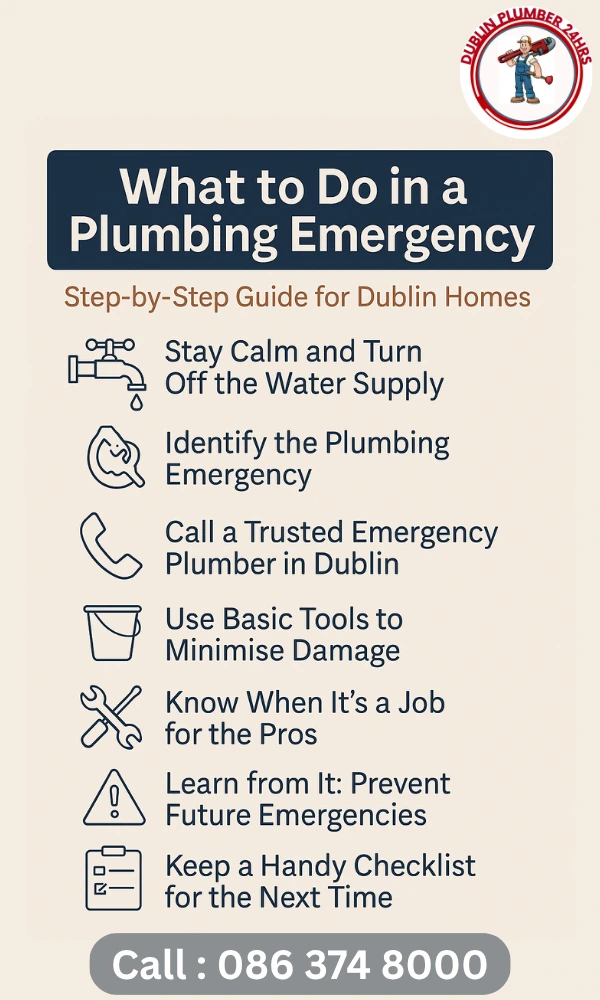
1. Turn Off the Main Water Supply
When water is leaking from a burst pipe or damaged fitting, the first thing to do is stop the flow.
Find your main stopcock and turn it clockwise to shut off the water supply.
In many Dublin homes, the stopcock is located:
- Under the kitchen sink
- In a utility room
- Near the front entrance
- In a cupboard or service area
Older properties may have stopcocks in less obvious locations.
If you cannot find yours, read our guide on where to find the stopcock in an Irish home.
Important: Never enter a flooded area or reach across electrical equipment to access a stopcock. If the valve is stuck, don’t force it and risk breaking the pipe.
Once the water is off, check whether the leak has slowed or stopped. If water continues to escape, it may be coming from a storage tank, heating system or another source.
2. Check for Electrical Hazards
Water leaking through ceilings, walls or near electrical fittings can be dangerous.
If water is reaching sockets, lights, appliances or electrical wiring, keep everyone away from the affected area.
Do not touch wet switches, plugs or electrical equipment.
Only switch off the electricity at the consumer unit if you can reach it safely without entering a wet area or touching wet equipment.
If there is any doubt, leave the area and contact a qualified electrician.
Protecting yourself and your family always comes before protecting the property.
3. Identify the Plumbing Emergency
Once the immediate danger is under control, try to identify what has happened.
You don’t need to diagnose the problem yourself. A simple description will help the plumber understand the situation.
Burst or leaking pipe
Water may be spraying from a joint, dripping through a ceiling or collecting under a sink.
A burst pipe can cause serious damage, particularly when it is hidden behind walls or under floors.
Overflowing toilet
If the toilet is overflowing, stop flushing it.
If accessible, turn off the toilet’s isolation valve. Avoid using nearby fixtures if wastewater is backing up.
Leaking attic water tank
Water may appear on an upstairs ceiling or around the hot press.
If you suspect a leaking attic tank, turn off the relevant water supply where safe. Avoid standing beneath a ceiling that is sagging or heavily waterlogged.
No hot water or heating
Losing hot water or heating can be urgent, particularly during cold weather or where vulnerable people are affected.
However, not every heating fault is a plumbing emergency. If you suspect a gas problem, follow the gas safety advice below.
Blocked drains
A slow-draining sink is usually less urgent than sewage backing up into the house.
If wastewater is overflowing, stop using the affected plumbing fixtures and arrange professional help.
4. Call an Emergency Plumber in Dublin
If the water will not stop, flooding is getting worse or the problem could damage your property, contact a professional plumber.
Dublin Plumber 24Hrs provides emergency plumbing callouts across North Dublin, South Dublin and Dublin City Centre.
When contacting us, it helps to explain:
- Your location in Dublin
- Where the leak or blockage is happening
- Whether you have turned off the water
- Whether water is near electrical fittings
- Whether the property is currently flooding
Photographs or a short video can also help us understand the problem before attending.
For urgent assistance, contact our emergency plumber in Dublin or call 086 374 8000.
We explain the inspection charge and provide a quote before carrying out additional work.
5. Reduce Water Damage While Waiting
After turning off the water and checking that the area is safe, there are a few simple things you can do.
Use buckets and towels
Place buckets beneath dripping pipes and use towels to absorb water on the floor.
Move belongings away
Move furniture, rugs, electrical devices and other belongings away from the leak if it is safe to do so.
Open taps if appropriate
If you have isolated the mains water supply, opening a cold tap may help release water remaining in the pipework. This will not necessarily drain a storage tank or heating system.
Avoid temporary repairs that could make things worse
Tape and makeshift pipe repairs are not reliable solutions for serious leaks. Do not dismantle pressurised fittings or work on gas appliances.
Record the damage
Take photographs of the affected area for your records or insurance provider, once it is safe.
These steps can help limit the damage, but they do not replace a proper plumbing repair.
6. Know When a Plumbing Problem Is an Emergency
Not every plumbing issue needs an immediate callout.
A dripping tap can usually wait for a scheduled appointment. A burst pipe flooding your kitchen cannot.
Here are some examples:
| Plumbing problem | What to do |
|---|---|
Burst pipe with uncontrolled water |
Turn off the supply and seek urgent help |
Water leaking near electrics | Keep clear and arrange appropriate emergency help |
Overflowing toilet with wastewater |
Stop using affected fixtures and seek urgent help |
Small drip under a sink | Isolate if possible and arrange a repair |
Slow-draining shower | Book an inspection if the problem continues |
No hot water |
Check whether anyone is vulnerable and arrange the appropriate repair |
Suspected gas leak |
Leave the area and call Gas Networks Ireland |
If you are unsure whether the problem needs urgent attention, explain the situation when you contact the plumber.
7. What If You Smell Gas?
A suspected gas leak is different from an ordinary water leak and requires immediate safety precautions.
If you smell gas:
- Avoid naked flames and smoking.
- Do not operate electrical switches or appliances.
- Open doors and windows if you can do so safely.
- Turn off the gas supply only if it is safe.
- Leave the affected area.
- Call Gas Networks Ireland on 1800 20 50 50 from a safe location.
Do not attempt to repair gas pipes, connections or appliances yourself.
Gas work must be carried out by an appropriately registered gas installer. If there is an immediate danger to life or property, call 112 or 999.
9. Keep This Emergency Plumbing Checklist Handy
Save these reminders somewhere easy to find:
- Know where your main stopcock is located.
- Keep towels, buckets and a torch accessible.
- Know what to do if water reaches electrical fittings.
- Save the number of a local emergency plumber.
- Arrange repairs for leaks and faulty fittings before they get worse.
You may never need to use this checklist, but it is useful to have it ready.
✅ Frequently Asked Questions
What should I do first during a plumbing emergency?
If water is leaking or flooding your home, turn off the main water supply if it is safe to do so. Keep away from electrical hazards and contact an emergency plumber if the problem cannot be controlled.
Is a leaking pipe always an emergency?
Not always. A small drip that can be isolated may be suitable for a scheduled repair. An uncontrolled leak, burst pipe or water entering electrical areas needs urgent attention.
Can I repair a burst pipe myself?
You can shut off the water and take safe steps to limit damage. However, a burst pipe usually needs professional repair. Avoid dismantling fittings or attempting repairs to pressurised systems.
Who should I call if I smell gas?
Leave the affected area and call Gas Networks Ireland on 1800 20 50 50 from a safe location. Do not attempt to repair a suspected gas leak yourself.
How much does an emergency plumber cost in Dublin?
The cost depends on the time of the callout and the work required. Our standard inspection and diagnosis fee starts at €95, with different rates for evenings and weekends. We provide a quote before additional work begins.
You can check our Dublin plumber price list for further information.
Do you provide emergency plumbing services at weekends?
Yes. Dublin Plumber 24Hrs offers emergency plumbing callouts 24 hours a day, including weekends and bank holidays, subject to availability.
Final Thoughts
A plumbing emergency can happen at any time, especially in homes with older pipes and fittings.
The most important thing is to act safely. Turn off the water where possible, stay away from electrical hazards and get professional help when the problem cannot be controlled.
Knowing where your stopcock is and keeping an emergency contact number handy can save valuable time.
Need an Emergency Plumber in Dublin?
Dublin Plumber 24Hrs has been serving Dublin homes since 2001.
Whether you have a burst pipe, a leaking water tank or an overflowing toilet, our team can help assess the problem and arrange the appropriate repair.
Call 086 374 8000 or contact our emergency plumbing team for assistance across Dublin.
Dealing with a Plumbing Emergency?
We’re here 24/7. Fast, reliable emergency plumbing help across Dublin.
Contact Our Emergency Plumber Now