
Last Updated: March 11, 2026
Radiator cold at bottom is usually caused by sludge buildup (magnetite and debris) settling inside the radiator, which restricts hot water circulation. Unlike trapped air—which affects the top—cold spots at the bottom typically require system flushing or cleaning to restore proper heat flow. According to the Chartered Institute of Plumbing and Heating Engineering (CIPHE), sludge accumulation is a common cause of reduced radiator efficiency in domestic heating systems.
Why Is Your Radiator Cold at Bottom?
If your radiator is cold at bottom but warm at the top, you’re not imagining things — it’s a very common heating issue, especially in older Dublin homes.
When your heating system is running properly, hot water should circulate evenly through the radiator. It enters at the top, moves through the internal panels, and exits once it cools. But when the bottom of the radiator stays cold, it usually means something is blocking proper circulation.
In most cases, that “something” is sludge.
We see this regularly in houses across Dublin — particularly in properties with heating systems that haven’t been flushed in years. Over time, debris builds up inside the system and settles at the lowest point. And the lowest point? The bottom of your radiator.
If your heating is on but the radiator is cold at the bottom, the system isn’t distributing heat efficiently. That means higher gas bills, slower warm-up times, and unnecessary strain on your boiler.
The good news? This is usually fixable without replacing your boiler.
The Most Common Cause – Sludge in Radiators
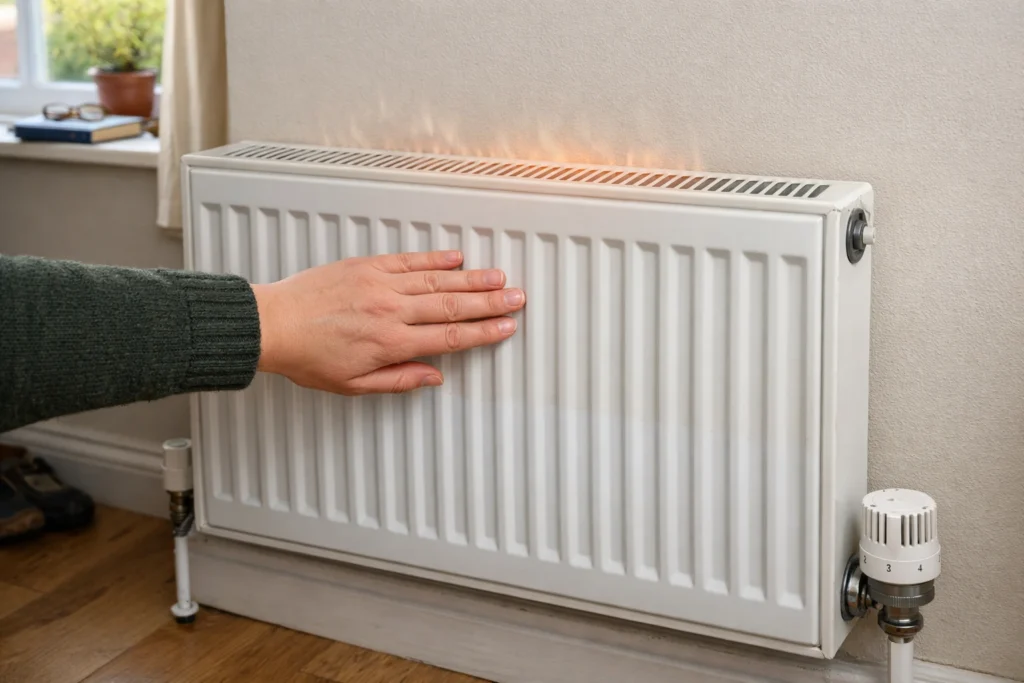
The number one reason a radiator is cold at bottom is sludge build-up inside the heating system.
Sludge forms from:
Rust from inside old radiators
Corrosion in pipework
Dirt and debris in system water
Metal particles from normal wear
Over time, this mixture turns into a thick, dark residue that settles at the bottom of radiators because it’s heavier than water.
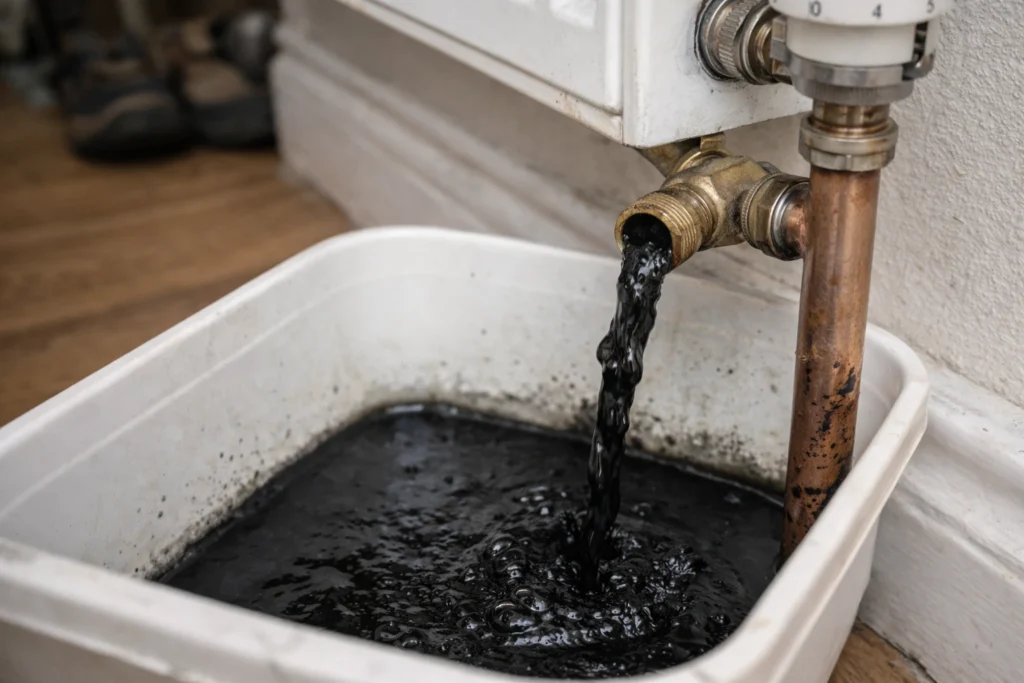
We’ve drained systems in Dublin homes where the water coming out was almost black. When that sludge collects at the base, it blocks hot water from circulating properly. The result? A radiator cold at bottom and warm only near the top.
Other signs sludge may be present:
Boiler making banging or kettling noises
Heating taking longer to warm up
Some radiators hotter than others
Dirty water when bleeding a radiator
Modern condensing boilers are more sensitive to circulation problems, so sludge doesn’t just affect comfort — it can reduce efficiency and shorten boiler lifespan.
In many cases, the solution is a professional power flush. A proper system flush removes built-up debris and restores even heat distribution. (If you’d like to understand the process in detail, see our guide to power flushing in Dublin.)
Other Reasons a Radiator Is Cold at Bottom
While sludge is the most common cause, it’s not the only one.
Here are a few other reasons your radiator may not be heating evenly:
1. Heating System Imbalance
Sometimes the issue isn’t blockage — it’s balance.
In larger homes, water may flow more easily through radiators closest to the boiler, leaving others with weaker circulation. This can make some radiators feel uneven or partially cold.
Balancing adjusts the flow through each radiator so heat distributes evenly throughout the property.
2. Faulty or Stuck Radiator Valve (TRV)
Thermostatic radiator valves (TRVs) can stick, especially after summer when heating hasn’t been used for months.
If a valve isn’t opening fully, it restricts water flow. That can cause part of the radiator to stay cool.
We often free up stuck valves quickly during a standard visit, but in some cases, the valve needs replacing.
3. Low Boiler Pressure
If several radiators are struggling, check your boiler pressure.
Most systems should sit around 1–1.5 bar when cold. If pressure is too low, circulation weakens and some radiators may not heat properly.
If you notice boiler pressure dropping repeatedly, that may indicate a deeper issue — and it’s worth having it checked during a professional boiler service.
If you’re dealing with a radiator cold at bottom, don’t panic. In many cases, it’s a manageable issue — but it’s important to address it before it affects the rest of your heating system.
Step-by-Step: What You Can Check Yourself
If your radiator is cold at bottom, there are a few safe checks you can do before calling a plumber.
We always encourage homeowners to try simple steps first — as long as it’s safe.
1. Turn the Heating Off First
Let the system cool down before touching any valves. This prevents burns and gives you a clearer idea of what’s happening.
2. Feel the Whole Radiator
Hot at top, cold at bottom → likely sludge
Cold at top, warm at bottom → likely trapped air
Completely cold → possible valve or pressure issue
This quick check tells you a lot.
3. Bleed the Radiator (If the Top Is Cold)
If the top is cold, use a radiator key to release trapped air:
Place a cloth underneath
Open valve slowly
Let air escape until water flows steadily
Close gently
After bleeding, always check boiler pressure. It may need topping up slightly.
If the radiator is still cold at bottom after bleeding, the issue is likely internal build-up rather than air.
4. Check the Radiator Valves
Make sure both valves are fully open. Sometimes the thermostatic valve pin gets stuck. If you gently tap it and it doesn’t move, it may need attention.
If none of these steps solve the problem, it’s time to look deeper.
When DIY Won’t Fix It
If a radiator is cold at bottom and keeps returning to the same issue every winter, that’s usually a sign of a larger system problem.
Call a professional if you notice:
Multiple radiators cold at bottom
Dark or dirty water when bleeding
Boiler making unusual banging noises
Heating taking much longer to warm up
Pressure dropping repeatedly
In these cases, the system likely needs professional cleaning or balancing.
We’ve seen many Dublin homes where partial heating was blamed on “an old boiler,” when the real issue was heavy sludge restricting flow. Once properly flushed and balanced, the system performed like new.
Ignoring the problem can:
Increase gas bills
Overwork the boiler
Shorten system lifespan
Lead to breakdowns during winter
It’s always cheaper to fix circulation early than replace a stressed boiler later.
Why This Is Common in Dublin Homes
Radiators cold at bottom are especially common in Dublin properties built in the 70s, 80s, and 90s.
Many of these homes:
Still have original radiators
Use older copper pipe systems
Have never had a full system flush
Lack magnetic filters
Over time, small amounts of corrosion build up. In areas with harder water, debris accumulates faster. When heating systems aren’t serviced annually, that build-up settles quietly at the base of radiators.
We regularly see this across semi-detached homes in areas like Tallaght, Clondalkin, Rathfarnham, and older estates around North and South Dublin.
The good news? It’s rarely catastrophic. In most cases, the system just needs professional cleaning and protection — not a full replacement.
Regular servicing and preventive maintenance make a huge difference. That’s why we always recommend combining heating checks with an annual boiler service to keep everything circulating properly.
How We Fix a Radiator Cold at Bottom (Professional Approach)
When a radiator is cold at bottom and simple checks haven’t worked, we take a structured approach. We don’t jump straight to “you need a new boiler.” We diagnose properly first.
Here’s how we handle it:
1. System Assessment
We check:
Boiler pressure
Flow temperature
Radiator temperature differences
Valve operation
Overall circulation
This tells us whether the issue is localised to one radiator or affecting the whole system.
2. Check for Sludge Build-Up
If sludge is suspected, we may:
Drain a small amount of system water to inspect it
Measure temperature variation across the radiator
Inspect filters (if fitted)
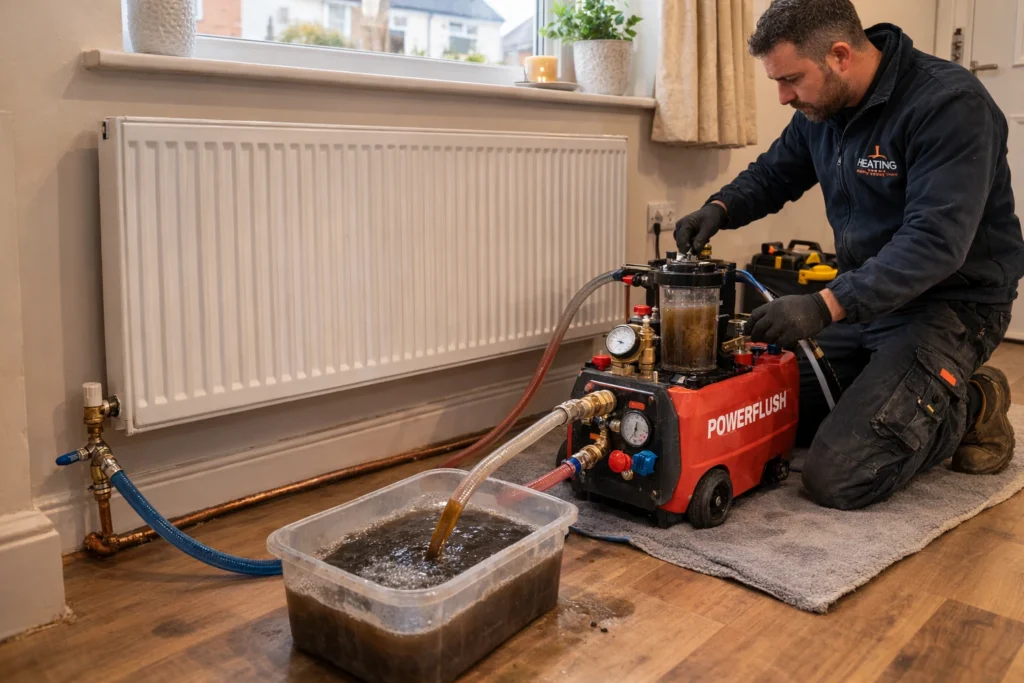
If the radiator is cold at bottom due to heavy sludge, the system usually benefits from a professional power flush.
A proper power flush:
Uses specialist equipment
Circulates cleaning solution at controlled pressure
Breaks down internal debris
Restores even heat distribution
Improves boiler efficiency
After flushing, we typically add inhibitor and recommend a magnetic filter to prevent the problem returning.
3. Radiator Balancing
If circulation is uneven rather than blocked, we balance the heating system.
Balancing ensures each radiator receives the correct flow of hot water. This is often overlooked but makes a noticeable difference — especially in larger Dublin homes.
4. Valve Replacement (If Needed)
If the issue is a faulty TRV or seized valve, we replace it.
Stuck valves are common after summer when heating hasn’t been used. Replacing them is usually straightforward and restores proper flow quickly.
In most cases, a radiator cold at bottom is completely fixable without major disruption. The key is diagnosing the real cause instead of guessing.
How to Prevent a Radiator Cold at Bottom in Future
Once you’ve solved the issue, prevention is simple — and much cheaper than repeated repairs.
Here’s what we recommend:
✔ Annual Boiler Servicing
A yearly service keeps the system clean, checks pressure, and spots circulation issues early.
✔ Install a Magnetic Filter
Magnetic filters capture metal debris before it settles in your radiators. This dramatically reduces sludge formation.
✔ Add Inhibitor to the System
Inhibitor slows corrosion inside pipework and radiators.
✔ Periodic System Flushing
Older systems may benefit from a professional flush every few years, depending on condition.
✔ Don’t Ignore Early Warning Signs
If you notice:
Uneven heating
Gurgling sounds
Slow warm-up times
It’s better to address it early rather than waiting until multiple radiators are cold at bottom.
A heating system should warm your home evenly and efficiently. If it’s not doing that, there’s always a reason — and in most Dublin homes, it’s something we’ve seen and fixed many times before.
Frequently Asked Questions – Radiator Cold at Bottom
How do you fix a radiator that is cold at the bottom?
If a radiator is cold at the bottom, the most common cause is sludge build-up inside the radiator. Bleeding it won’t fix the issue because the problem isn’t trapped air — it’s restricted water flow.
To fix it, you may need:
A professional power flush
A chemical system clean
Valve inspection or replacement
Heating system balancing
In many Dublin homes, we find that sludge removal restores full heat without needing new radiators.
Why is my radiator cold at the bottom but doesn't need bleeding?
When a radiator is warm at the top but cold at the bottom, it usually means sludge has settled inside. Air rises to the top, so trapped air causes the opposite problem — cold at the top.
If bleeding doesn’t release air and the bottom stays cold, the issue is almost always circulation or sludge.
Why is the top of my radiator warm but not the bottom?
This is a classic sign of sludge build-up. Over time, rust particles and debris collect at the bottom of the radiator. This blocks hot water from flowing evenly through the lower section.
The boiler may be working perfectly — the radiator itself is simply restricted.
What happens if you bleed a radiator with the heating on?
Bleeding a radiator while the heating is on is not recommended.
Hot water and pressure inside the system can:
Spray out unexpectedly
Cause minor burns
Release water under pressure
Always turn the heating off and allow the system to cool before bleeding.
What are signs your radiator needs bleeding?
A radiator usually needs bleeding if:
The top is cold and bottom is warm
You hear gurgling or bubbling noises
The radiator feels unevenly heated at the top
If the bottom is cold instead, bleeding will not solve the issue.
What are signs of trapped air in a radiator?
Signs of trapped air include:
Cold at the top
Warm at the bottom
Gurgling sounds
Slow heating
Trapped air is different from sludge. The location of the cold spot helps you identify the cause.
How do I know if I have an airlock in my radiator?
An airlock often affects the top of the radiator and may stop heat circulating properly.
You may notice:
One radiator not heating at all
Gurgling in pipes
Cold patches at the top
Airlocks are less common than sludge in older Dublin heating systems.
How often do radiators need bleeding?
Most radiators should only need bleeding once a year, typically before winter.
If you find yourself bleeding radiators frequently, it could indicate:
A pressure issue
A small system leak
Poor system balance
That’s something worth checking professionally.
How do I tell if there is a blockage in my radiator?
A blockage is likely if:
The radiator is cold at the bottom
Bleeding makes no difference
Heating takes longer than usual
Several radiators heat unevenly
Blockages are usually caused by sludge or corrosion inside the system. A power flush or chemical clean is often the proper solution.
Still Have a Radiator Cold at the Bottom?
If your radiator is cold at the bottom and bleeding hasn’t helped, it’s usually a sign of sludge build-up or restricted circulation in your heating system. The longer it’s left, the harder your boiler has to work — and that means higher energy bills and uneven heating across your home.
At Dublin Plumber 24 Hrs, we deal with heating issues like this every week across Dublin. Whether it’s a simple system balance or a full power flush, we’ll diagnose the real cause and fix it properly — no guesswork.
We’re fully insured, experienced in domestic heating systems, and available when you need us.
✔ Clear diagnosis
✔ Honest pricing
✔ Same-day service available
✔ Serving all areas of Dublin
If you’re unsure whether it’s trapped air, sludge, or something more serious — just give us a call. We’re happy to talk you through it.
📞 Call us now on 086 374 8000
📲 Or book online for a quick inspection and fixed quote.
Your heating should work properly in every room — let’s get it sorted.
If you’re facing multiple heating issues, our emergency plumber Dublin team is available across the city