

Last Updated: January 28, 2026
An unvented hot water cylinder is a sealed, pressurised system that delivers strong hot water pressure directly from the mains, without relying on an attic tank. In Ireland, these systems must be installed and serviced by a qualified heating engineer because they operate under pressure and include safety components such as pressure relief valves and discharge pipework. Annual servicing is recommended to maintain safety, efficiency, and warranty cover.
What Is an Unvented Hot Water Cylinder?
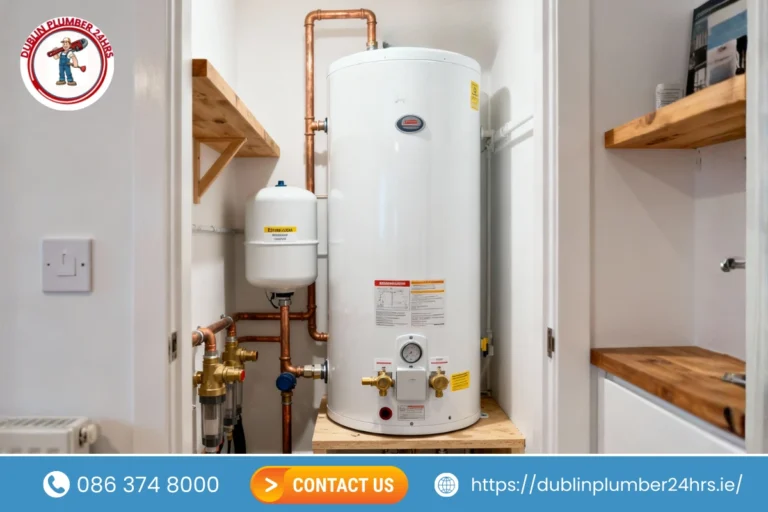
An unvented hot water cylinder is a sealed, pressurised tank that heats water directly from your mains supply. Because it doesn’t rely on a cold-water storage tank in the attic, it delivers much stronger water pressure throughout the house — especially for showers, baths, and taps that usually struggle.
Most modern homes now prefer unvented cylinders because they’re cleaner, more efficient, and far easier to maintain. You get constant hot water, fewer pressure drops, and no risk of frozen attic tanks during winter. If your home suffers from weak shower pressure or slow hot water flow, switching to an unvented system is often the most reliable fix.
Types of Unvented Cylinders
Unvented cylinders come in a few different setups, and choosing the right one depends on how your home heats water:
Indirect Unvented Cylinder
This type uses your gas boiler or heat pump to heat the water inside the cylinder. It’s the most common setup in Irish homes because it works well with existing heating systems and is very efficient.
Direct Unvented Cylinder
Here, the water is heated using an internal immersion heater. These are ideal for homes without a boiler or with limited space, but they can cost a little more to run.
In simple terms:
If you already have a boiler, go indirect.
If you rely on immersion heating, go direct.
“No matter which type you choose, it must be installed by a certified heating engineer because these systems operate under pressure.”
Advantages of Using an Unvented Cylinder
Unvented hot water cylinders are popular for a reason — they solve the pressure and hot-water problems that most older homes struggle with. Because they run directly from the mains, you get a steady, powerful flow at every tap, even when multiple showers are running at the same time.
There’s also no need for a cold-water storage tank in the attic, which frees up space and removes the risk of tank leaks or freezing during winter. Unvented cylinders heat water more efficiently, recover faster, and deliver consistent hot water throughout the day. If you’re renovating, upgrading your heating system, or constantly battling weak pressure, an unvented setup is usually the most reliable long-term choice.
Unvented Cylinder Installation — What’s Involved?
Installing an unvented hot water cylinder isn’t a DIY job. Because these systems operate under pressure, they must be fitted by a qualified and certified heating engineer who understands the safety controls and the correct installation procedure.
A typical installation includes:
Checking your home’s mains water pressure and flow rate
Choosing the right cylinder size based on your hot water usage
Connecting it to your boiler, heat pump, or immersion setup
Fitting the expansion vessel, safety valves, and discharge pipework
Testing all components to make sure the system is operating safely
Depending on your home’s layout and existing pipework, the job usually takes between half a day and a full day. Once installed correctly, the system provides strong water pressure, faster hot water recovery, and a more reliable supply compared to older vented tanks.
Unvented Cylinder Cost in 2025
The cost of installing an unvented hot water cylinder varies depending on the size of the tank, the heating setup in your home, and whether any pipework needs upgrading. On average, homeowners can expect to pay for:
Cylinder unit: €850–€2,200 depending on the brand and capacity
Installation labour: €450–€850 for a certified heating engineer
Extra components: €100–€300 (expansion vessel, valves, pipe upgrades)
In most cases, the full installation ends up between €1,400 and €3,300. Homes with older pipework or outdated hot-press layouts may need additional changes, especially if we’re combining the upgrade with larger projects like a house replumbing or a bathroom renovation.
If your current cylinder is leaking, noisy, or taking too long to heat, replacing it early usually saves money — especially if it prevents damage from a failed tank.
Common Problems With Unvented Cylinders (and Fixes)
Even though unvented cylinders are reliable, they can develop issues when components wear out or when the system hasn’t been serviced for a while. The most common problems include:
Low or inconsistent hot water pressure
Often caused by a clogged filter, faulty valve, or general plumbing restrictions. If pressure is dropping across your home, a quick inspection from an emergency plumber Dublin team can pinpoint the exact cause.
No hot water
Usually related to immersion failures, boiler faults, or thermostat issues. We check these during a standard service.
Water leaking from the top of the tank
This can be linked to a faulty pressure relief valve or an expansion vessel that needs recharging.
Excessive noise or vibration
Sometimes caused by trapped air or a failing component within the heating system.
If you notice any of these issues, it’s important to get the system checked quickly. Because unvented cylinders operate under pressure, safety is a priority — especially when dealing with relief valves or pressurised pipework.
Unvented Cylinder vs Vented Cylinder — Which Is Better?
Both systems heat water, but they work very differently. A vented cylinder relies on a cold-water tank in the attic, while an unvented cylinder takes water directly from the mains. This difference affects pressure, space, installation cost, and long-term performance.
Unvented cylinders give you stronger, more consistent pressure and are ideal for homes with multiple bathrooms or busy morning routines. Vented cylinders are cheaper to install but rely on gravity, so pressure is always limited. If you’re renovating or upgrading an older system, most homeowners now choose unvented for convenience, modern performance, and long-term reliability.
How Long Do Unvented Hot Water Cylinders Last?
Most unvented cylinders last 10–20 years, depending on the brand, water quality, and how well the system is maintained. The internal stainless-steel or copper construction is designed to handle pressure, but components like expansion vessels, thermostats, and valves may need attention over the years.
Signs that your cylinder may be nearing the end of its life include slow recovery time, reduced hot water volume, unusual noises, or small leaks around fittings. Regular servicing helps extend the lifespan and keeps the safety features working correctly. When looked after properly, a good-quality unvented cylinder can perform reliably for well over a decade.
Safety Rules & Professional Installation Explained
In Ireland, unvented hot water cylinders must be installed and serviced by a suitably qualified heating engineer due to the pressurised nature of the system. Incorrect installation can pose safety risks and may invalidate manufacturer warranties.
Unvented cylinders include critical safety components such as pressure relief valves, thermostatic controls, expansion vessels, and correctly sized discharge pipework to safely manage excess pressure. A qualified installer ensures these components are fitted to required safety standards, the pipework is correctly sized, and all controls are fully tested before use.
Because the system is sealed and operates under pressure, annual servicing is strongly recommended to keep safety devices working correctly, maintain efficiency, and protect your warranty.
Best Unvented Cylinder Brands to Consider (2025)
While most modern cylinders perform well, a few brands consistently stand out for efficiency, reliability, and long-term durability. Megaflo remains one of the most recognised names, known for strong pressure performance and premium build quality. Joule and Kingspan also produce excellent unvented cylinders, offering a wide range of sizes suitable for apartments and large family homes alike.
Other options include Ideal and Vaillant, which pair well with matching boilers or heat pump systems. The right choice depends on your home’s size, preferred heating setup, and available space in your hot press. A professional can help match the cylinder capacity to your household’s daily hot water needs.
Do You Need an Unvented Cylinder? (Quick Checklist)
Not every home needs an unvented cylinder, but it can make a big difference if you frequently run out of hot water or struggle with weak pressure. Here’s a simple way to know if it’s the right upgrade for you:
You have low hot water pressure across showers and taps
You want strong flow rates without installing a pump
You have two or more bathrooms being used at the same time
You’re removing an old attic tank or renovating your hot press
You’re upgrading your boiler or switching to a heat pump
You want a cleaner, sealed system with fewer maintenance issues
If most of these apply, an unvented cylinder is usually the most efficient and future-proof option for your home.
FAQ Section
1. What are the disadvantages of unvented hot water cylinders?
Unvented cylinders need good incoming mains pressure, they require annual servicing, and installation must be carried out by a qualified heating engineer. They also cost slightly more upfront than vented tanks because of the safety controls included.
2. Which is better — vented or unvented hot water cylinders?
Unvented cylinders are better for homes that want strong water pressure and multiple bathrooms running at once. Vented cylinders still work well in older houses with low mains pressure, but they depend on gravity and usually deliver weaker flow rates.
3. Does an unvented cylinder improve water pressure?
Yes — unvented cylinders deliver mains-pressure hot water. If your home’s mains pressure is strong, you’ll get powerful flow from taps and showers without the need for a pump.
4. What do plumbers recommend for most modern homes?
Most heating engineers recommend unvented cylinders for homes with multiple bathrooms, modern layouts, or future plans for upgrades like heat pumps. They’re efficient, quiet, and remove the need for attic tanks.
5. What is the most common issue with unvented cylinders?
The most common issue is reduced flow due to a clogged inlet strainer or limescale buildup. Regular servicing prevents this, and most problems are minor if caught early.
6. How long does an unvented hot water cylinder last?
A well-maintained unvented cylinder typically lasts 15–25 years, depending on the brand, water quality, and annual servicing.
7. Will I run out of hot water with an unvented cylinder?
Only if the cylinder size is too small for your household. A correctly sized unit will supply steady hot water for showers, taps, and appliances without running out.
Installation & Replacement — Get a Certified Expert
Because unvented cylinders operate under pressure, they must be installed and maintained by a qualified heating engineer. A proper installation ensures the safety valves, discharge pipework, thermostats, and expansion vessel are all fitted and working correctly.
A professional will also check your home’s water pressure, recommend the right cylinder size, and make sure the system integrates properly with your existing boiler or heat pump. If you’re upgrading from an older vented system, the engineer will explain any additional pipework or safety controls needed to bring everything up to standard.
Getting the job done by a certified expert not only protects your home — it also ensures your new cylinder performs efficiently and stays within warranty.
Need a New Unvented Hot Water Cylinder Installed?
If your hot water is running out fast, pressure is low, or your current cylinder is past its best, we can help. Our qualified heating engineers install, replace, and upgrade unvented hot water cylinders safely and professionally — with zero hassle for you.
Why choose us?
24+ years of experience
Fully registered & insured team
Fast installation with minimal disruption
Honest pricing with no hidden fees