

Last Updated: December 22, 2025
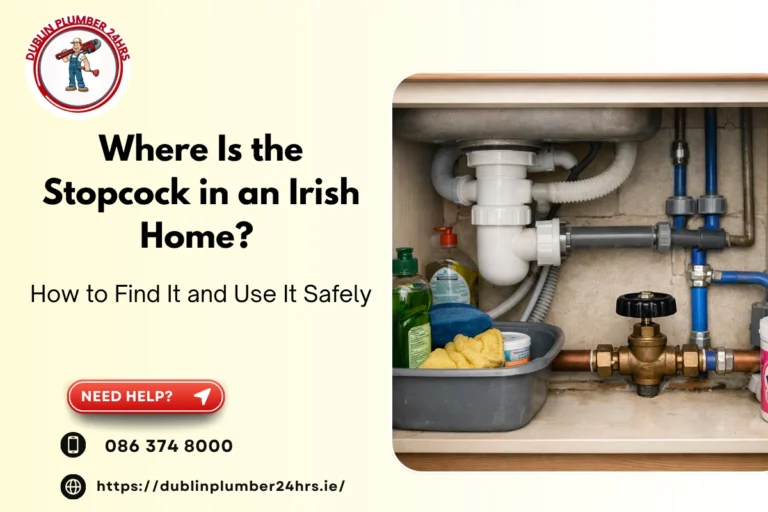
Where is the stopcock? In most Irish homes, the stopcock is located indoors near where the main cold water pipe enters the property, commonly under the kitchen sink, in a utility room, under the stairs, or near the front door. If it is not inside, there is usually an external stop tap in the footpath, driveway, or front garden near the property boundary. In apartments, the water shut-off valve may be in a shared service riser or controlled by the building management company, rather than inside the unit itself.
Source: Irish Water (guidance on household water shut-off valves)
Why Knowing Where the Stopcock Is Really Matters
Most people only start searching where is the stopcock when something has already gone wrong — a leaking pipe, water pouring under the sink, or a burst pipe late at night. In those moments, panic sets in fast.
We’ve helped many homeowners across Dublin who simply didn’t know where their stopcock was, and that delay often caused unnecessary water damage. Knowing where it is — and how to turn it off — gives you control in an emergency and can save you stress, time, and money.
In this guide, we’ll explain in simple terms where the stopcock is usually located in an Irish home, what it looks like, and how to deal with it safely. No jargon, no assumptions — just practical advice based on real homes we work in every day.
What Is a Stopcock?
A stopcock is the main valve that controls the water supply coming into your home. When you turn it off, all water to taps, toilets, and appliances stops. In Ireland, people often call it different things — a stopcock, stop tap, or main water shut off valve — but they all mean the same thing.
In most Irish houses, the stopcock is connected to the cold water pipe where it first enters the property. There is usually:
One internal stopcock inside the house
One external stop tap outside the property boundary
We often find that homeowners know of the stopcock, but aren’t sure where is my stopcock, or whether they even have access to it. That’s very common, especially in older Dublin homes or rented properties.
Where Is the Stopcock in a Typical Irish House?
The exact location can vary, but there are a few places where we most commonly find stopcocks in Irish homes.
Common Indoor Stopcock Locations
Start inside the house first. The stopcock is usually close to where the water pipe enters the building:
Under the kitchen sink
Inside a downstairs toilet or utility room
Under the stairs
Near the front door or hallway cupboard
It’s often hidden behind cleaning products, boxes, or cabinets, so a quick clear-out and a torch can help.
External Stop Tap Locations in Ireland
If you can’t find it indoors, the external stop tap is usually:
In the footpath outside your home
In the front garden or driveway
Near the boundary wall
In older estates, the stop tap may be shared between two houses. In apartments, water shut-off points are often in shared risers or controlled by the management company.
If you’re unsure where is the main water shut off valve in Ireland for your property type, that’s completely normal — and it’s something we regularly help homeowners identify safely.
Where Is the Stopcock in an Irish Apartment?
Apartments in Ireland work a bit differently from houses, and this is where many people get confused — especially during a leak or water emergency.
In most Irish apartments, you may not have a traditional stopcock inside your own unit like you would in a house. Instead, water shut-off points are often shared or centrally managed.
Common Stopcock Locations in Irish Apartments
From what we see regularly across Dublin apartment blocks, the stopcock or shut-off valve is usually located:
Inside a shared service riser on your floor
In a utility cupboard outside the apartment door
In the basement or plant room of the building
Occasionally inside the apartment, near the hot press or under the kitchen sink (more common in newer builds)
Because of this setup, many apartment residents are unsure where is my stopcock, or whether they are even allowed to access it themselves.
What to Do if You Live in an Apartment
If you’re renting or living in a managed apartment complex:
Check your lease or handover documents for water shut-off details
Contact the management company or caretaker — they usually control shared valves
If there’s an active leak, notify building management immediately before attempting to shut anything off
We often advise apartment owners and tenants to find this information before an emergency happens. When water is leaking, every minute counts, and delays caused by unclear access can lead to damage in neighbouring apartments.
If you’re unsure where is the main water shut off valve in Ireland for your apartment, it’s always better to ask than guess — especially with shared systems.
How to Find Your Stopcock Step by Step
If you’ve never located your stopcock before, don’t worry — most people haven’t. We usually talk homeowners through this over the phone, and it’s much simpler than it sounds.
Here’s the safest way to find it:
1. Start inside the house first
In Irish homes, the stopcock is most often indoors. Check under the kitchen sink, in the utility room, or in a downstairs toilet. These are the most common entry points for the main water pipe.
2. Follow the cold water pipe
Look for the thick cold water pipe coming into the property. The stopcock is usually fitted very close to where this pipe enters the house.
3. Check hidden or awkward spots
It’s common for the stopcock to be tucked behind cupboards, boxes, or cleaning supplies. Use a torch and take your time.
4. Look outside if needed
If you can’t find it indoors, check the footpath, driveway, or front garden for a small covered box. This usually contains the external stop tap.
5. Ask if you’re renting
If you’re unsure where is my stopcock and you rent the property, your landlord or management company should be able to tell you exactly where it is.
We always recommend locating it calmly before there’s an emergency, rather than trying to search while water is leaking.
How to Turn Off the Water Safely
Once you’ve found the stopcock, it’s important to turn it off correctly to avoid causing damage.
Turn the valve clockwise (to the right) to shut off the water
Turn it slowly and steadily — no sudden force
Once closed, check a tap to confirm the water has stopped flowing
If the valve turns easily and the water shuts off, that’s exactly what you want. We often suggest testing it once a year so you know it works when you really need it.
A Word of Caution
If the stopcock hasn’t been used in years, it may feel stiff. Do not force it. Applying too much pressure can snap the valve or cause a leak, especially in older Irish plumbing systems.
If it doesn’t turn with gentle pressure, it’s safer to stop and get advice.
Common Stopcock Problems We See in Irish Homes
From our experience working in Dublin homes every day, stopcock issues are very common — especially in older properties.
Here are the most frequent problems we come across:
Seized or stuck stopcocks
These haven’t been turned in years and won’t move without risk.
Leaking valves
Sometimes the valve drips when turned, which means it needs attention.
Hidden or inaccessible stopcocks
Built behind units or flooring during renovations.
Very old valve types
Older gate valves are more likely to fail than modern lever valves.
These problems don’t usually cause trouble until there’s an emergency — which is why knowing the condition of your stopcock ahead of time makes such a difference.
What to Do If the Stopcock Is Stuck or Missing
If your stopcock won’t turn, or you can’t find it at all, the most important thing is not to panic and not to force it.
If the valve feels seized:
Stop turning as soon as you feel strong resistance
Don’t use tools or extra leverage
Avoid twisting the pipework around it
We’ve seen cases where forcing a stuck stopcock caused the pipe to crack or the valve to snap, which led to more water damage than the original issue.
If you genuinely can’t locate a stopcock:
Check the external stop tap near the boundary of the property
In apartments, contact the management company or caretaker immediately
If water is actively leaking, try to contain it with towels or a bucket until help arrives
Not every Irish home has an easily accessible stopcock, especially older houses or renovated properties. That’s more common than people realise.
When It’s Time to Call a Professional Plumber
There are situations where it’s safer to get professional help rather than risk making the problem worse.
We usually recommend calling a plumber if:
The stopcock is seized or leaking
The valve turns but doesn’t fully shut off the water
The stopcock is hidden behind fitted units or flooring
You live in an apartment with shared water systems
In these cases, a plumber can replace or reposition the valve safely, often upgrading it to a modern lever-style stopcock that’s much easier to use in the future.
If you’re dealing with an active leak and can’t isolate the water, it’s best to contact an Emergency plumber Dublin service as soon as possible to prevent further damage.
A Simple Tip to Prevent Future Stress
One of the best things you can do as a homeowner or tenant is to find and test your stopcock before there’s an emergency.
We suggest:
Locating it on a calm day
Gently turning it off and back on once a year
Making sure everyone in the household knows where it is
This small step can make a huge difference during a burst pipe, leak, or plumbing fault — especially late at night or during cold weather.
If you’re ever unsure about the condition or location of your stopcock, getting advice early is always easier than dealing with water damage later.
Frequently Asked Questions About Stopcocks in Irish Homes
Where is the main water shut off valve in an Irish home?
In most Irish homes, the main water shut off valve (stopcock) is located indoors, usually under the kitchen sink, in a utility room, under the stairs, or near the front door. If it’s not inside, there is often an external stop tap located in the footpath, driveway, or front garden near the property boundary.
Where is my stopcock usually located?
Your stopcock is typically fitted close to where the main cold water pipe enters the house. Common places include under the kitchen sink, in a downstairs toilet, or inside a hallway cupboard. In apartments, the shut-off valve may be in a shared riser or controlled by the management company.
How do you turn off the water in your house in Ireland?
To turn off the water in an Irish home, turn the stopcock clockwise (to the right). Do this slowly and gently. Once closed, open a tap to check that the water has stopped flowing. If the valve is stiff or won’t turn, do not force it.
Where is the stop tap located outside the house?
The external stop tap is usually located in a small covered box in the footpath, driveway, or front garden. In older housing estates, this stop tap may be shared between two properties.
What if my stopcock is stuck?
If your stopcock is stuck, do not apply force or use tools, as this can damage the valve or pipework. A seized stopcock is common in older Irish homes and usually needs professional replacement to prevent leaks or future failure.
Do apartments in Ireland have individual stopcocks?
Some newer apartments have individual shut-off valves inside the unit, but many rely on shared valves located in service risers or plant rooms. In these cases, the building management company or caretaker usually controls the water shut-off.
Final Thought: A Small Check That Can Save a Lot of Stress
Taking a few minutes to locate your stopcock before there’s a leak or burst pipe can save you a huge amount of stress later on. It’s one of those small jobs that’s easy to put off — until you really need it.
If you’re unsure where your stopcock is, if it’s stuck, or if you’d like it checked or upgraded to a modern, easy-to-use valve, we’re always happy to help. We work across Dublin and deal with this exact issue in Irish homes every day.
Even a quick bit of advice now can prevent bigger problems later — and we’d rather help you stay ahead of an emergency than deal with the damage after it happens.