

Last Updated: February 24, 2026
Why is my toilet constantly running? In most cases, a running toilet is caused by a faulty flapper valve, incorrect float height, or a worn fill valve inside the cistern. These components control how water enters and exits the tank after flushing. When they fail to seal or regulate water properly, the toilet continues refilling or trickling into the bowl. If left unresolved, this can waste significant amounts of water and increase your utility bills.
Why Does My Toilet Keep Running After Flushing?
If your toilet keeps running after you flush, the issue is usually inside the cistern rather than in the pipes.
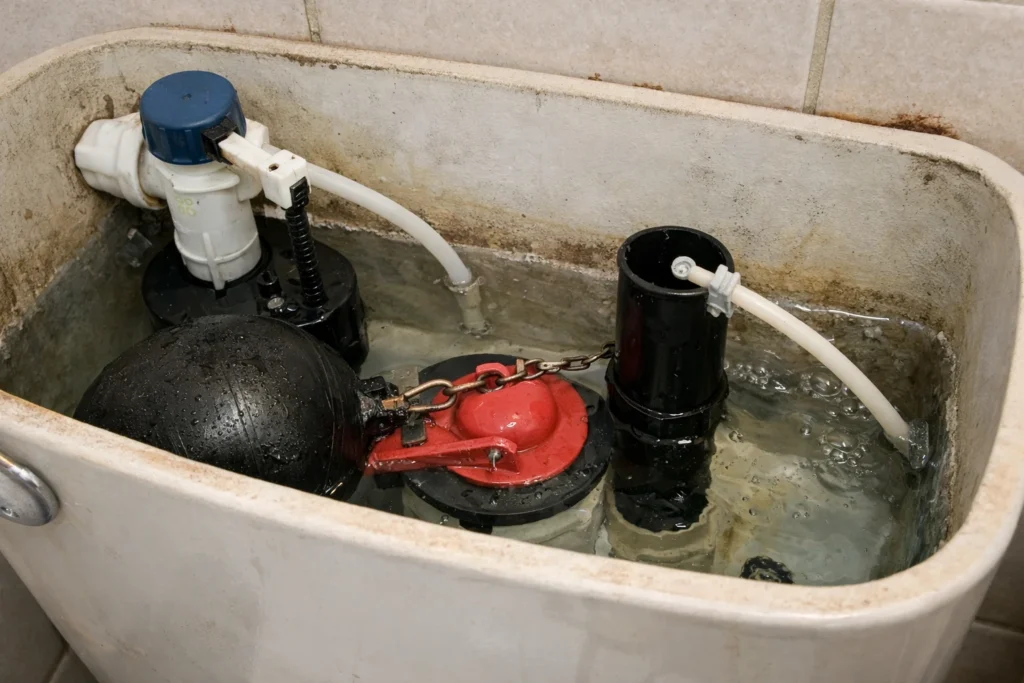
The most common cause is a flapper valve that isn’t sealing properly at the bottom of the tank. Over time, rubber flappers can warp, harden, or become misaligned. When this happens, water slowly leaks from the tank into the bowl, forcing the fill valve to keep refilling it.
You may also hear a constant trickling sound or notice the toilet refilling at random intervals without being used.
A quick check involves removing the cistern lid and gently pressing down on the flapper. If the running stops, the seal is likely worn and needs replacing.
Faulty Fill Valve or Float Problems
Another common reason a toilet constantly runs is a problem with the fill valve or float mechanism.
The fill valve controls how water enters the tank after a flush. If it’s worn or misaligned, water may continue flowing even after the tank is full. This often causes a steady hissing or refilling sound.
The float regulates the water level. If it’s set too high, water will rise above the correct level and spill into the overflow pipe, causing continuous running.
You can check this by observing the water level in the tank. It should sit slightly below the top of the overflow tube. If it’s too high, adjusting the float may resolve the issue.
If adjustments don’t fix the problem, replacing the fill valve is usually a straightforward solution.
Water Leaking Into the Bowl (Silent Toilet Leak)
Sometimes a toilet runs quietly without obvious noise. This usually means water is slowly leaking from the tank into the bowl.
Even if you don’t hear constant refilling, a worn flapper or faulty seal can allow small amounts of water to escape continuously. Over time, this triggers the fill valve to top up the tank again.
How to Check for a Silent Leak
A simple test is to add a few drops of food colouring into the cistern and wait 10–15 minutes without flushing.
If coloured water appears in the bowl, there is a leak between the tank and bowl.
Silent leaks often go unnoticed for weeks and can significantly increase water usage.
How Much Water Can a Running Toilet Waste?
A constantly running toilet can waste a surprising amount of water.
Depending on the severity of the leak, it can waste hundreds of litres per day, leading to noticeably higher water bills. In some cases, a faulty fill valve or flapper can waste thousands of litres per week.
Aside from cost, continuous running also puts strain on internal components, which may shorten the lifespan of the toilet mechanism.
Fixing the issue early is usually inexpensive and prevents bigger plumbing problems later.
According to guidance from Uisce Éireann, even small household leaks can waste significant volumes of water over time and increase overall utility costs.
When Should You Call a Plumber?
While many running toilet issues are minor, professional help may be needed if:
The problem continues after replacing the flapper
The fill valve adjustment doesn’t stop the water flow
There is visible damage inside the cistern
You notice water pooling around the base of the toilet
If the issue persists, it’s best to have it properly inspected to prevent hidden leaks or water damage. Our Plumber Dublin team can quickly diagnose toilet leaks and replace faulty components to restore normal operation.
How to Stop a Running Toilet (Step-by-Step Checks)
If your toilet is constantly running, you can safely check a few things before calling a plumber.
Turn off the water supply – The isolation valve is usually located near the base of the toilet.
Remove the cistern lid carefully.
Inspect the flapper valve – Check for warping, cracks, or poor sealing.
Check the chain length – It should have slight slack, not too tight or tangled.
Observe the water level – It should sit below the overflow pipe.
Adjust the float if necessary – Lowering it slightly may stop overflow running.
If replacing the flapper or adjusting the float doesn’t solve the issue, the fill valve may need replacing.
Can a Running Toilet Increase Your Water Bill?
Yes — even a slow, constant trickle can significantly increase water usage.
A toilet that runs continuously can waste hundreds of litres of water per day. Over time, this can lead to:
Higher utility bills
Unnecessary water waste
Added strain on plumbing components
Many homeowners only notice the issue when bills increase or when they hear constant refilling sounds at night.
Fixing a running toilet early is usually quick and inexpensive compared to long-term water waste.
How to Prevent a Toilet From Constantly Running
Preventative maintenance can help avoid repeated toilet issues.
Check inside the cistern once or twice a year
Replace rubber flappers every few years as they wear out
Avoid using harsh chemical cleaners inside the tank
Address small leaks immediately before they worsen
Routine checks can prevent unexpected plumbing issues and help extend the lifespan of your toilet components.
Need Help With a Running Toilet in Dublin?
If your toilet keeps running after basic checks or continues refilling despite adjustments, it’s best to have it inspected properly. Small internal faults can sometimes hide bigger plumbing issues, especially in older systems.
At Dublin Plumber 24 Hrs, our experienced team can quickly diagnose faulty flappers, fill valves, overflow problems, or hidden leaks. We provide fast, reliable plumbing repairs across Dublin and ensure your toilet is working efficiently again.
Call us on 086 374 8000 or contact us online to arrange a professional inspection.
Frequently Asked Questions About a Constantly Running Toilet
How do you fix a toilet that runs constantly?
To fix a toilet that runs constantly, check the flapper valve first to ensure it seals properly at the bottom of the tank. If it’s worn or misaligned, replace it. Also inspect the float and fill valve to ensure the water level sits below the overflow pipe. Adjusting or replacing these components usually resolves the issue.
What is the most common cause of constantly running water in a toilet?
The most common cause is a worn or faulty flapper valve that allows water to leak from the tank into the bowl. This triggers the fill valve to keep refilling the tank. Over time, rubber flappers degrade and fail to create a proper seal.
How do I stop my toilet from trickling water?
If your toilet is trickling water, check the water level inside the cistern. If it’s too high, lower the float so water doesn’t spill into the overflow pipe. Also inspect the flapper for damage or debris preventing it from sealing properly.
Will a running toilet eventually stop?
No. A running toilet will not fix itself and may continue wasting water until the faulty part is repaired or replaced. Ignoring the issue can lead to higher water bills and additional wear on internal components.
What happens if you don’t fix a running toilet?
If left unfixed, a running toilet can waste hundreds of litres of water per day, increasing your water bill and potentially causing long-term plumbing damage. Continuous water flow also shortens the lifespan of internal parts.
Should I jiggle the handle of a running toilet?
Jiggling the handle may temporarily stop the water if the chain is stuck or the flapper isn’t seated correctly. However, this is only a short-term fix. If the issue keeps returning, the internal components likely need adjustment or replacement.