
Last Updated: September 15, 2026
Before buying a house in Dublin, check the water pressure, visible pipework, stopcock, attic water tank, hot-water system, taps, toilets, showers and radiators. Look for leaks, corrosion, water staining and signs of previous plumbing repairs. If anything looks unusual or your property survey raises a plumbing concern, consider having it checked by a plumber before you buy.
Buying a house is a big decision, and it is easy to focus on the things you can see straight away — the kitchen, bathroom, flooring, windows and general condition of the property. The plumbing is often harder to judge during a normal viewing.
A tap may run perfectly while there is a slow leak behind bathroom boxing. Water pressure may seem fine downstairs but be poor upstairs. Older pipework, worn valves or previous repairs may also be hidden from view.
If you are buying a house in Dublin, taking a few minutes to check the plumbing can help you spot areas that may need further investigation. This guide covers some of the practical plumbing checks worth making before you buy.
It is not a replacement for a professional building survey. Instead, it helps you understand what to look for and when a plumbing concern may need a closer inspection.
Why Plumbing Should Be Part of Your House Inspection
A house inspection can tell you a lot about the overall condition of a property, but plumbing deserves particular attention because much of the system is hidden behind walls, floors, kitchen units and bathroom fittings.
The Society of Chartered Surveyors Ireland (SCSI) explains that a building survey assesses the general condition of a property and can identify defects that may otherwise be missed. The level of inspection also varies depending on the type of survey and the property. For example, more detailed surveys may include accessible concealed areas, while building services may be observed rather than fully tested.
This is important when buying an older or previously renovated house. A property may have had plumbing repairs and alterations carried out at different times, so what looks like one complete system may actually contain a mixture of older and newer pipework, valves and fittings.
From our own plumbing work around Dublin, we have also seen cases where the obvious problem was not the whole story. A leaking hot-water pipe, for example, was traced back to a poor joint and required a section of copper pipework to be replaced. On another job, a small bathroom leak was hidden behind wooden boxing.
The point is not to assume that every stain or old pipe means a major problem. It is to investigate anything unusual before you make decisions about repairs or upgrades.
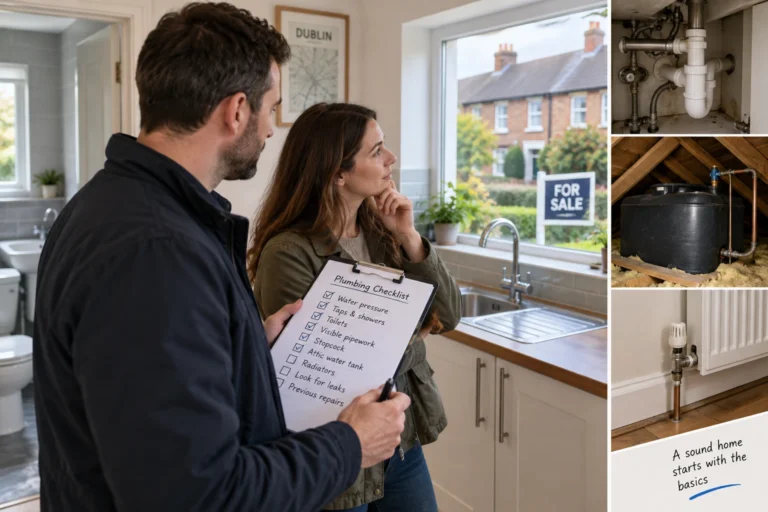
10 Plumbing Checks Before Buying a House in Dublin
1. Test the Water Pressure
Turn on the taps and check how the water flows. If possible, test both hot and cold water and compare the pressure at different outlets around the house.
Pay particular attention to upstairs bathrooms and showers. A noticeable difference between downstairs and upstairs pressure may be worth investigating.
Low water pressure does not automatically mean there is a serious plumbing fault. The cause can depend on how the property is supplied and how its plumbing system has been set up. Some Dublin homes have gravity-fed systems, while others have different arrangements.
If the pressure seems unusually weak, inconsistent or different from what you expected, it is better to understand why before buying rather than discovering it after you move in.
2. Look for Leaks — Including the Ones You Can't Easily See
Some leaks are obvious. Others are much easier to miss during a quick house viewing.
Look under kitchen and bathroom sinks, around toilets, near baths and showers and around any accessible pipework. Also look at ceilings below bathrooms for staining, bubbling paint or signs of previous water damage.
We have attended Dublin homes where a relatively small leak was hidden behind bathroom boxing. In another case, a hot-water copper pipe was leaking around a poor joint. These are good examples of why it is worth looking beyond an obvious drip from a tap.
A stain does not necessarily mean there is an active leak. It may be evidence of an old problem that has already been repaired. Ask about it and, if you are unsure, have it checked.
If you need a Plumber Dublin homeowners can call to investigate suspicious leaks or existing pipework before taking on a property, it is better to identify the condition of the plumbing early rather than guess what may be happening behind the surface.
3. Check the Condition of Visible Pipework
You will not be able to see all the plumbing during a viewing, but take a look at whatever pipework is accessible.
Check beneath sinks, around the hot-water system and anywhere else pipes are exposed.
Things worth noticing include:
- corrosion around pipes or fittings
- staining below joints
- signs of previous leaks
- poorly supported pipework
- numerous joints or alterations
- sections of old and newer pipework connected together
Mixed pipework is not automatically a problem. Houses are repaired and upgraded over time, and replacing one damaged section of pipe does not mean the entire system needs replacing.
What matters is its condition.
This is something we see in everyday plumbing work. Sometimes a problem is limited to one valve, seal, joint or short section of pipework. Finding a localised fault early can be very different from discovering widespread deterioration throughout the property.
If several areas of the plumbing appear heavily aged, corroded or repeatedly repaired, however, it may require a more detailed inspection.
4. Find the Main Stopcock and Check the Isolation Valves
Ask where the property’s main stopcock is located.
It sounds like a small detail, but knowing how to shut off the water quickly is important if a pipe or fitting starts leaking after you move in.
Check that the stopcock is accessible rather than buried behind furniture, boxing or stored items. Where possible and with the owner’s permission, confirm whether it operates correctly rather than forcing a valve that appears seized.
It is also worth looking at accessible isolation valves beneath sinks, beside toilets and around other plumbing fixtures.
Older or damaged valves can cause problems when future repairs are needed. Your Plumber may need to isolate a particular fixture or section of the system, and working valves can make that considerably easier.
A faulty valve does not necessarily indicate a problem with the rest of the house. In one of our recent Dublin jobs, for example, a broken valve on a kitchen tap was an isolated repair. While checking the system, an airlock was also identified and cleared before the job was finished.
That is another reason not to judge the condition of an entire plumbing system from one visible fault.
5. Check the Attic Water Tank
If the property has a cold-water storage tank in the attic, it is worth checking its visible condition where the attic can be accessed safely.
Attic tanks are still found in many Dublin homes, particularly properties with traditional gravity-fed plumbing systems.
Look for obvious signs such as:
- water staining around or beneath the tank
- evidence of overflowing
- leaking connections
- damage to the tank
- poor or missing insulation
- problems with the lid
- signs of previous repairs
You should never put yourself at risk trying to reach a difficult attic space during a viewing. If access is unsafe or restricted, leave the inspection to an appropriate professional.
A problem with an attic tank should not be ignored simply because the tank is out of sight. A slow Water Tank leak in attic can damage ceilings and surrounding materials before the homeowner notices water downstairs.
The type of tank and plumbing arrangement can also tell you more about how water is supplied to bathrooms and showers. This becomes particularly useful when we move to the next checks: understanding the hot-water and heating system, testing toilets and showers, and looking for previous plumbing alterations.
6. Understand the Hot Water and Heating Setup
Before buying a house, try to understand how the hot water and heating are set up rather than assuming the system will be familiar.
Depending on the property, you may find a hot-water cylinder, immersion heater, gas boiler, storage tank or a combination of different systems. Older homes may also have had parts upgraded over the years while other parts of the original plumbing remain.
Check accessible pipework and valves around the hot-water system for signs of leaking, corrosion or previous repairs. If possible, confirm that the hot water is working normally.
This is particularly useful when buying an existing property. We recently attended a home in Rathfarnham where the new owner had inherited a combined heating setup that was completely unfamiliar to them. After investigating the system, we were able to sort the issue and explain how everything worked.
You do not need to become an expert on the heating system before buying the house. But you should have a reasonable idea of what is installed, how old the main components are and whether there are any known problems.
7. Test the Taps, Toilets and Showers
Don’t just look at the bathroom and kitchen fittings. Use them where you are allowed to during the viewing.
Run the hot and cold taps and watch how quickly the water drains away. Flush the toilets and listen to what happens after the cistern refills. If possible, check the shower flow as well.
Look out for:
- dripping taps
- taps that are difficult to operate
- toilets that continue running after flushing
- water leaking around the base of a toilet
- slow drainage
- weak shower flow
- staining around bathroom fittings
Concealed toilets deserve some attention too. The cistern may be hidden behind a wall or panel, which means you cannot immediately see the working components.
We have dealt with a concealed cistern where water was continuously leaking into the toilet because the fill valve had failed. From the outside, there was very little to suggest what was happening inside until the system was checked.
Again, this does not mean a concealed cistern is something to avoid. It simply shows why testing the plumbing is more useful than only looking at it.
8. Check Radiators and Heating Pipework
Take a quick look around the radiators and their visible connections.
Check around radiator valves and the floor beneath them for staining, corrosion or signs of previous leaks. If the heating is operating during the viewing, you may also notice whether individual radiators are warming normally.
An old radiator or valve does not necessarily need replacing just because of its age. What matters is whether there are signs of deterioration, leaking or an ongoing problem.
If you are planning renovations after buying the property, it is also worth thinking ahead. Moving radiators, changing bathrooms or altering the heating layout can affect the plumbing work and overall renovation budget.
9. Look for Previous Plumbing Repairs and Alterations
Most existing houses will have had some plumbing work carried out over the years. That is completely normal.
What you are trying to establish is whether the work appears to have been maintained properly and whether there are signs of recurring problems.
Look at accessible areas for things such as repeated joints, abandoned pipework, staining around previous repairs or unusual alterations.
We have seen leaking copper pipework where the problem came from a poor existing joint. In that case, the solution was to remove the affected section and repair it correctly. It did not mean the entire house needed new pipework.
This distinction is important when buying a property. One poor repair is very different from widespread problems throughout the plumbing system.
If something looks questionable, make a note of it and ask about the history of the work rather than immediately assuming the worst.
10. Look for Signs That More Than a Small Repair May Be Needed
A dripping tap, worn valve or leaking fitting is normally a very different situation from a plumbing system showing problems in several areas.
Pay more attention when you see a combination of issues such as:
- repeated leaks in different locations
- badly corroded pipework
- several old or seized valves
- poor water pressure
- numerous previous repairs
- damaged or ageing water-storage equipment
- pipework that appears to have been altered repeatedly
Even then, the answer is not automatically a full replumbing.
Sometimes individual sections can be repaired or upgraded. In other properties, particularly where deterioration is widespread, it may make more sense to assess the plumbing as a whole.
If there are concerns about the overall condition of the pipework, our house replumbing Dublin guide explains when partial or complete replacement may be worth considering.
Older Dublin Homes Can Need a Closer Plumbing Check
Older houses can have plenty of character, but their plumbing history may also stretch across several decades.
During that time, bathrooms may have been renovated, extensions added, cylinders changed and individual sections of pipework repaired. You can therefore find older and newer plumbing working together within the same property.
Traditional gravity-fed systems and attic storage tanks are also common in existing Dublin homes. These systems are not automatically problematic. What matters is their condition, how they have been maintained and whether previous alterations have been carried out properly.
Our work in Dublin has shown why it is worth looking at the complete picture. We have dealt with everything from a single poor copper joint and hidden bathroom leaks to airlocks, failed valves and ageing plumbing components. Often these are repairable individual faults rather than evidence that the entire plumbing system is failing.
If you have concerns about pipework, water pressure or an unfamiliar plumbing setup, an experienced Dublin Plumber can help establish what actually needs attention before you plan unnecessary work.
What Does a Pre-Purchase Plumbing Inspection Check?
A pre-purchase plumbing inspection looks more closely at the plumbing than simply turning on a few taps during a house viewing. Depending on what is safely accessible, a plumber may check visible pipework, water pressure, taps, toilets, showers, valves, water-storage tanks, hot-water equipment and signs of leaks or previous repairs.
There are limits to what can be checked without opening walls, floors or inaccessible boxing. The aim is to identify visible problems and anything that may need further investigation before you buy.
When Is It Worth Calling a Plumber Before You Buy?
Not every property needs a separate plumbing inspection.
If everything appears to be working normally, the accessible plumbing is in reasonable condition and your property survey has not raised any concerns, further investigation may not be necessary.
It may be worth getting professional advice when you find unexplained damp or water staining, unusually poor pressure, badly corroded pipework, evidence of repeated leaks, problems with an attic tank or a plumbing and heating arrangement you do not understand.
The same applies if a surveyor has highlighted something that needs specialist attention.
If you are searching for a Plumber near me because a property inspection has raised a plumbing concern, try to get the issue checked before making assumptions about how serious or expensive it may be.
A relatively small fault and a widespread plumbing problem can look similar to a homeowner at first. Proper investigation helps establish the difference.
Repair, Upgrade or Replumbing?
This is one of the most important distinctions to make when assessing an existing house.
An isolated problem may only need a repair. A leaking joint, faulty valve or damaged fitting can often be dealt with individually.
Several ageing components may need targeted upgrades. For example, particular valves, sections of pipework or plumbing fixtures may need attention without replacing everything.
Widespread deterioration may need a broader assessment. Repeated leaks, significant corrosion or problematic pipework throughout the property may justify considering partial or full replumbing.
The right decision depends on the actual condition of the house rather than its age alone.
Quick Plumbing Checklist Before Buying a House
Taking a simple checklist with you can make it easier to remember the less obvious plumbing checks during a viewing.
☐ Test hot and cold water pressure
☐ Run taps in the kitchen and bathrooms
☐ Flush accessible toilets
☐ Check the shower flow
☐ Look underneath sinks for leaks
☐ Check ceilings and walls for water staining
☐ Inspect accessible pipework and joints
☐ Find the main stopcock
☐ Look at accessible isolation valves
☐ Check the attic water tank where safely accessible
☐ Understand the hot-water and heating setup
☐ Look around radiators and valves
☐ Ask about previous leaks or plumbing repairs
☐ Note anything highlighted in the property survey
☐ Get anything concerning checked before you buy
Taking this checklist to a viewing? Download our free printable Plumbing Checklist Before Buying a House and keep it on your phone or print a copy to bring with you.
Need a Plumbing Problem Checked Before Buying?
Finding a plumbing problem does not necessarily mean you should walk away from a property. What matters is understanding what the problem is and what may be required to put it right.
Dublin Plumber 24Hrs has more than 24 years of plumbing experience, working in homes across Dublin City and South Dublin. We can investigate plumbing concerns, leaks, water-pressure problems, tanks, pipework and other issues that may need a closer look.
If something has been raised during a viewing or property survey, get in touch before deciding what work the house may need.
Frequently Asked Questions
Does a house survey check the plumbing?
A property survey may identify visible plumbing concerns and comment on the condition of accessible services, depending on the type and scope of survey. It does not necessarily involve fully testing the complete plumbing system or inspecting concealed pipework. If the survey raises a specific concern, a plumber may be needed for further investigation.
Should I get a plumbing inspection before buying a house?
Not every house requires a separate plumbing inspection. It can be worthwhile if you notice leaks, poor water pressure, corroded pipework, an ageing plumbing system or anything concerning in the property survey.
What plumbing problems should I look for when buying a house?
Check for leaks, staining, poor water pressure, corroded pipework, faulty taps or toilets, problems around the attic tank, damaged valves and signs of repeated previous repairs. Also make sure you understand the property’s hot-water and heating setup.
How can I tell if an older house needs replumbing?
Age alone is not enough to decide. Repeated leaks, widespread corrosion, deteriorating pipework and numerous previous repairs can indicate that a more detailed assessment is needed. Some houses only require individual repairs or partial upgrades.
Should I worry about low water pressure when buying a house?
Low pressure is worth investigating, but it does not automatically mean there is a major fault. The cause can depend on the property’s water supply and plumbing arrangement. Establishing the cause will give you a better idea of whether any work is required.
What does a pre-purchase plumbing inspection include?
It can include checks of accessible pipework, water pressure, taps, toilets, showers, valves, tanks, hot-water equipment and visible signs of leaks or deterioration. What can be inspected will depend on access and the plumbing system in the property.